
Company
We are Emogg Analytics
We measure, objectively and in real time, how an audience responds to a piece of content, an experience or a space. We read non-verbal language without interrupting what is happening.
What until now could only be asked afterwards, and from memory, can today be measured while it happens.
Where this comes from
Where this comes from: what we learned in high performance
Emogg Analytics was founded in Barcelona in 2020 around a question that came from sport rather than marketing: how do you know whether a person is responding to what they are experiencing, without interrupting them to ask?
In high-performance sport that question is answered every day. A coach working with an elite athlete has neither questionnaires nor time: they read posture, gesture, where attention is going, when fatigue sets in, when the stimulus exceeds what that person can take in at that moment. And they decide on that basis, in the minute it happens. It is a demanding discipline, because a misreading costs a competition.
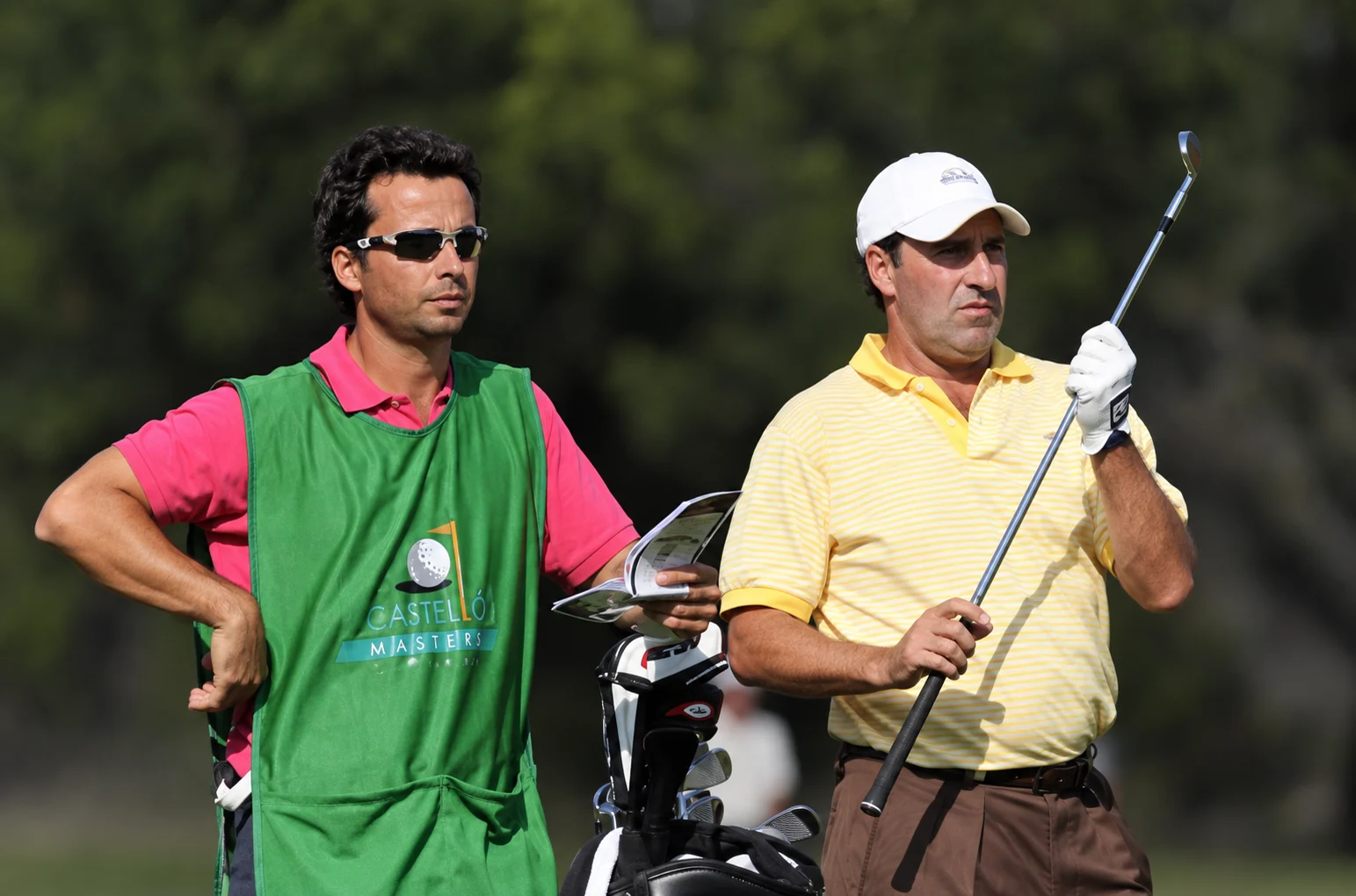
Two people who have worked that way for decades — Richi Serrés and Alejandro Larrazábal, coaches to elite athletes and teams — joined the project as founding partners and advisors. Their understanding of how human response manifests itself under pressure is the scientific foundation our algorithms were built on.

From one person to an audience
Transferring that method meant changing the object of measurement. A coach reads one specific athlete, someone they know and with whom they have an established relationship. We read a group: bodily, gestural and micro-gestural patterns across a significant sample of the audience, aggregated, anonymous and computed in real time.
That is the boundary that defines Emogg. We do not measure people: we measure content, experiences and spaces through the response of those receiving them.
That is where the vocabulary came from
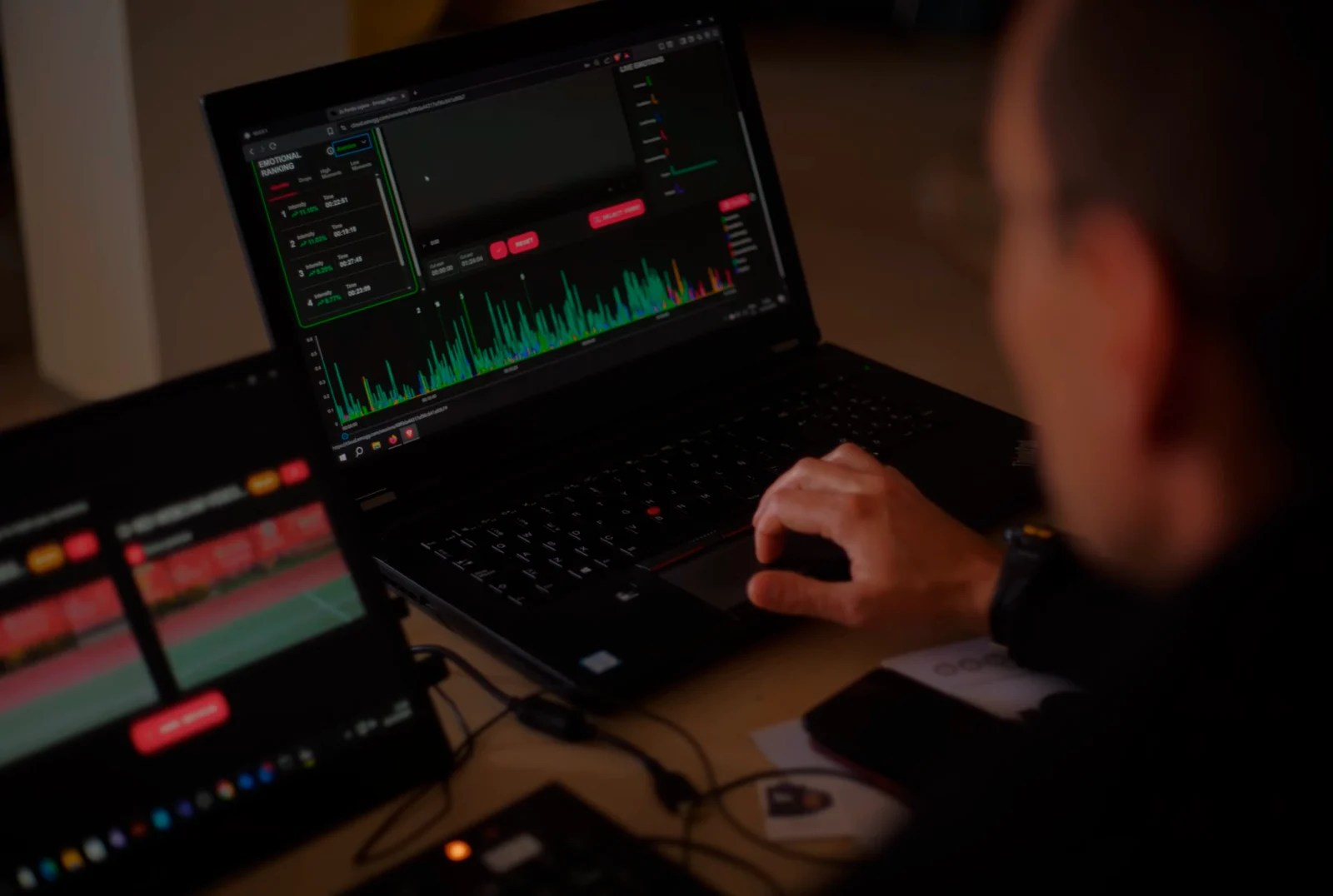
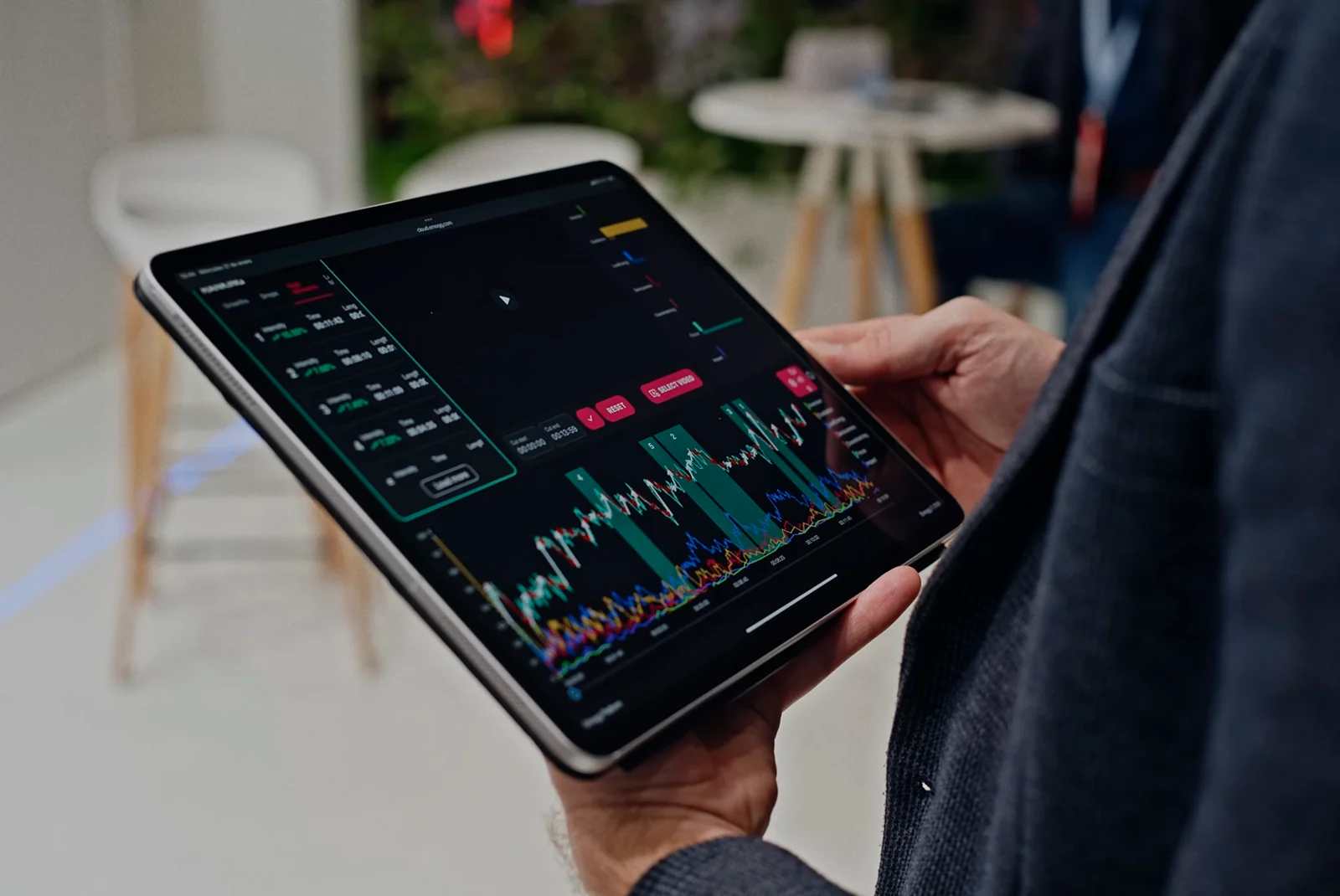
Focus, Activation, Gravity, Attenuation, Dissonance, Impact and Saturation are not communication categories: they are categories of human performance. Nine indicators describing the relationship between a piece of content and its audience, plus two headline readings that summarise them — Intensity, which tells you how much response there was, and Valence, which tells you its direction.
And that is where the product came from
Emogg is software. All the intelligence sits in the algorithm, not in the device, and that design decision is deliberate: measuring had to be within reach of anyone who needed it.
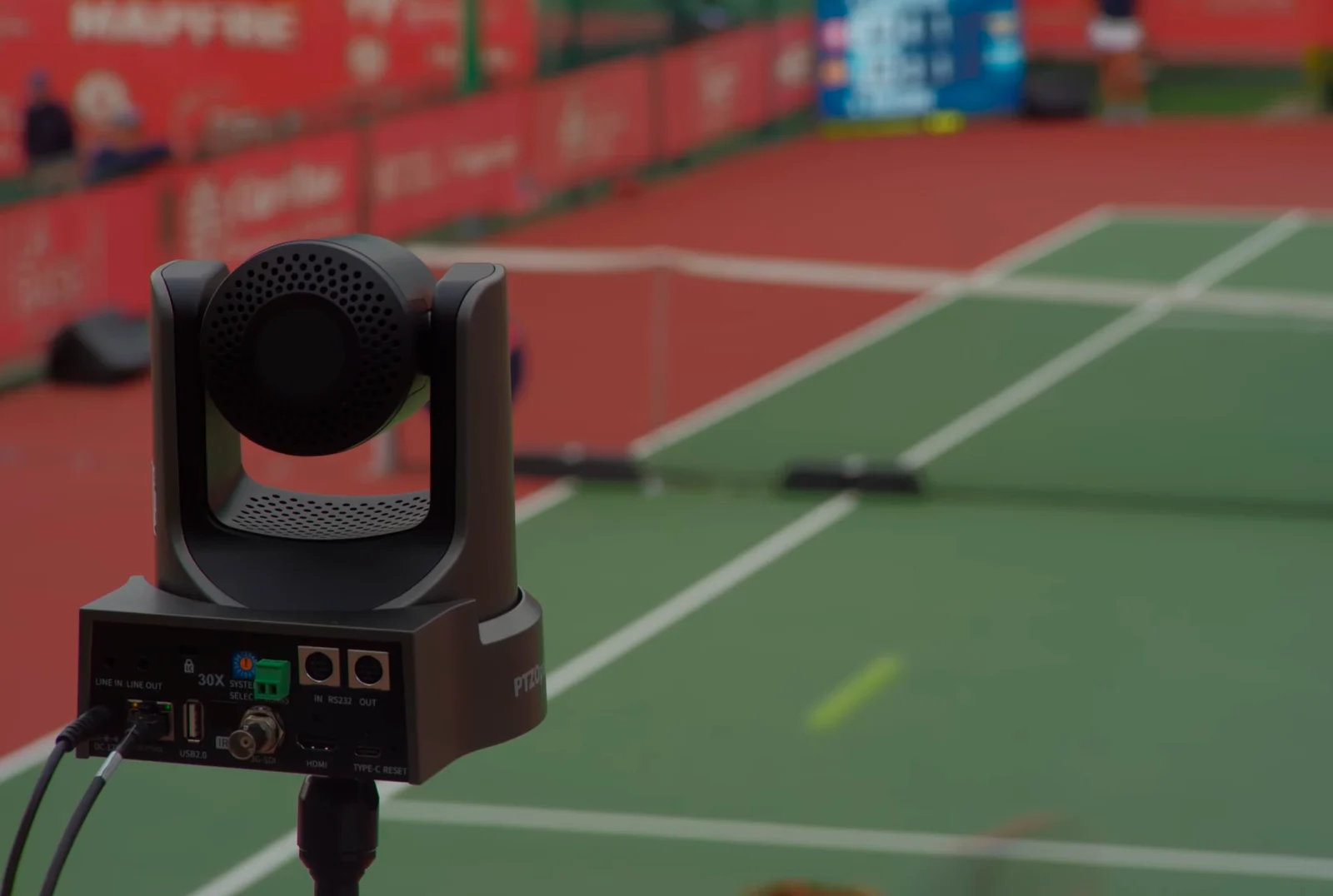
That is why it works with the sensor you already have. A phone on a tripod is enough for a meeting room or a classroom. A webcam covers a studio or a small space. And for an auditorium, a venue or a permanent installation there are professional PTZ cameras, which offer greater reach and detail. No specific hardware and no dedicated infrastructure are required: you measure with what is there, and scale when the project calls for it.
Today it is used at conventions and congresses, in training programmes, in audiovisual content studies, in retail spaces, in healthcare environments and in sports venues. The context changes and so does the person using it. The underlying question does not: what is that audience actually receiving, and what do you decide as a result?
The people behind Emogg
The people behind Emogg
Emogg Analytics is led by two brothers: Edgar Sanjuán, who heads the company, and Mark Sanjuán, who heads technology. Alongside them, founding partners Richi Serrés and Alejandro Larrazábal contribute what sits at the base of everything we do: the high-performance sports expertise our algorithms were built on.
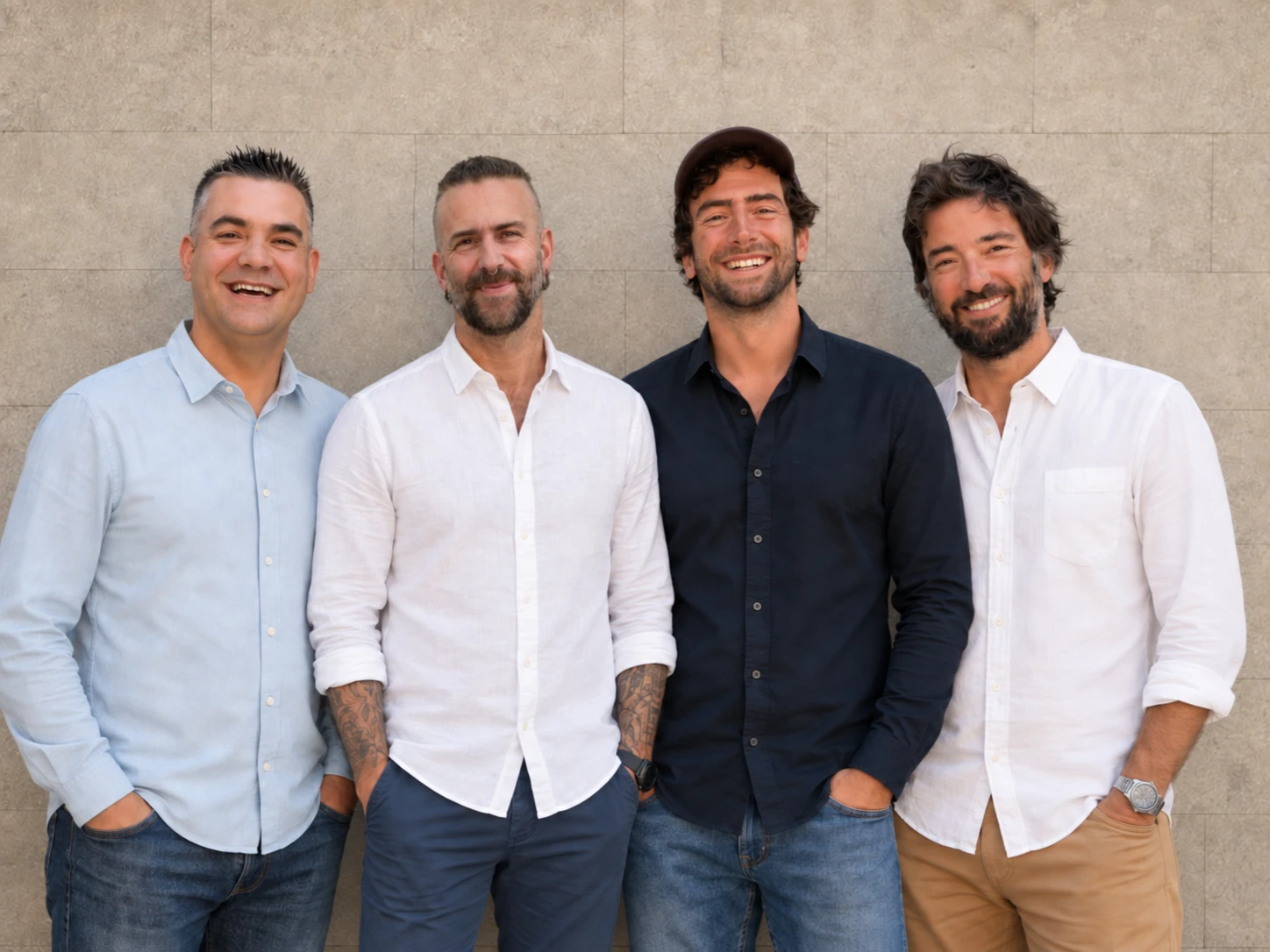
Leadership and technology
Edgar Sanjuán
CEO and founder
For over a decade he helped teams and organisations align ideas through Visual & Design Thinking. Today he leads Emogg with a clear mission: to turn human experience into objective data and transform the way we measure what really matters.
Mark Sanjuán
CTO
Ten years as an architect drew him towards the computational side of the profession, as far as building parametric 3D models. Another decade as a freelance developer shaped a way of working that draws no distinction between a building and a system. Today he leads Emogg's technical strategy and the solutions that quantify human experience.
The scientific foundation
Richi Serrés
Founding partner and advisor
Mental coach to elite athletes and teams with Olympic medals and world titles. His experience in the emotional management of high performance has been central to developing the scientific basis of Emogg's algorithms, contributing a unique understanding of how to measure and optimise human performance.
Alejandro Larrazábal
Founding partner and advisor
Coach to top-level golfers and creator of one of the largest golf content channels in Spain. His strategic vision and his experience in emotional training applied to sport bring Emogg a distinctive approach: carrying the lessons of high-performance sport across to the objective analysis of human experience.
The people who made it possible
A project like this is not built by four people. Emogg has been shaped by those who wrote code, set up sensors at dawn, argued over an indicator until it was right, or gave us a chance when we had very little to show. Part of what we are belongs to them.
oiraM · Andrés · Manu · Ventura · Menche · Alejandro · Marta · Lope · MJ · Ankit · Gabi · Quique · Jan · Mari Carmen · Jorge · Pilar · Dani · Xavi · Itam · Jon · Julio · Miquel · Roger
Our mission
To make caring about your audience measurable.
A patient's physiology is measured to know how they are and to help them. Not to judge them, not to monitor them: to look after them better. The same holds for audiences, and until very recently there was no serious way of doing it.
We help organisations understand how their audience receives what they offer — a message, a study, an experience, a space, a piece of content — with objective, real-time data, without questionnaires and without intrusion. So that decisions rest on evidence rather than intuition, and so that the next time is better than the last.
Our vision
If you care about your audience, you shouldn't have to guess.
Behind anything made for other people — a campaign, a training session, a study, a shop, a congress — there is someone who has taken dozens of decisions without really knowing how they would land. And if they genuinely care about the audience receiving them, they will want to know: to confirm what works, correct what doesn't, and avoid repeating it blind the following year.
That is the vision: that anyone sharing something with an audience can measure its response as it happens, understand what lands and what doesn't, and act accordingly. That no longer guessing becomes the norm rather than the privilege of a handful of projects.
Our values
Our values
No figure without its reference
Every result comes with whatever it is being compared against. We work with a significant sample of the audience, and we never call a value high or low without saying relative to what. There are no universal thresholds for human response and we do not invent them: we would rather draw a narrower conclusion than make a claim we cannot support.
Technical honesty
We are precise about what we measure and what we do not. We read indicators of non-verbal bodily response across a group of people — non-verbal communication applied to audience analysis. We do not interpret what an individual feels inside. We prefer a smaller, true promise to a large, approximate one.
Privacy by design
Our sensors retain no images and no video. We do not use facial recognition, we do not access biometric information and we do not build profiles. Everything is computed in real time and results are always aggregated and anonymous, in full compliance with GDPR. We are not a surveillance or security company, and the design of the product makes that impossible by construction.
Describe, don't judge
No indicator is good or bad in itself. Saturation is a problem in a results presentation and a success at the close of an immersive experience. Our job is to describe rigorously what happened; the person running the project is the one who decides whether that was the response they were after.
Client autonomy
We stay close, especially during the first measurements, because data nobody knows how to read is worth nothing. But the aim is for measurement to become each organisation's own capability: a product built to fit them, in their hands, to use whenever they need it.
They have measured with Emogg











We are a platinum sponsor of EMA, the Event Managers Association Spain.
Where we are
Barcelona, Glòries
We work from the 22@ technology district, in the Glòries area. C/ de la Llacuna, 164, Space 122 — 08018, Barcelona, Spain.


Measure your next event, space or session.
Tell us what you are organising and we will tell you whether it makes sense to measure it, and how we would set it up.